
The Impact of AI on Custom Software Development in 2025
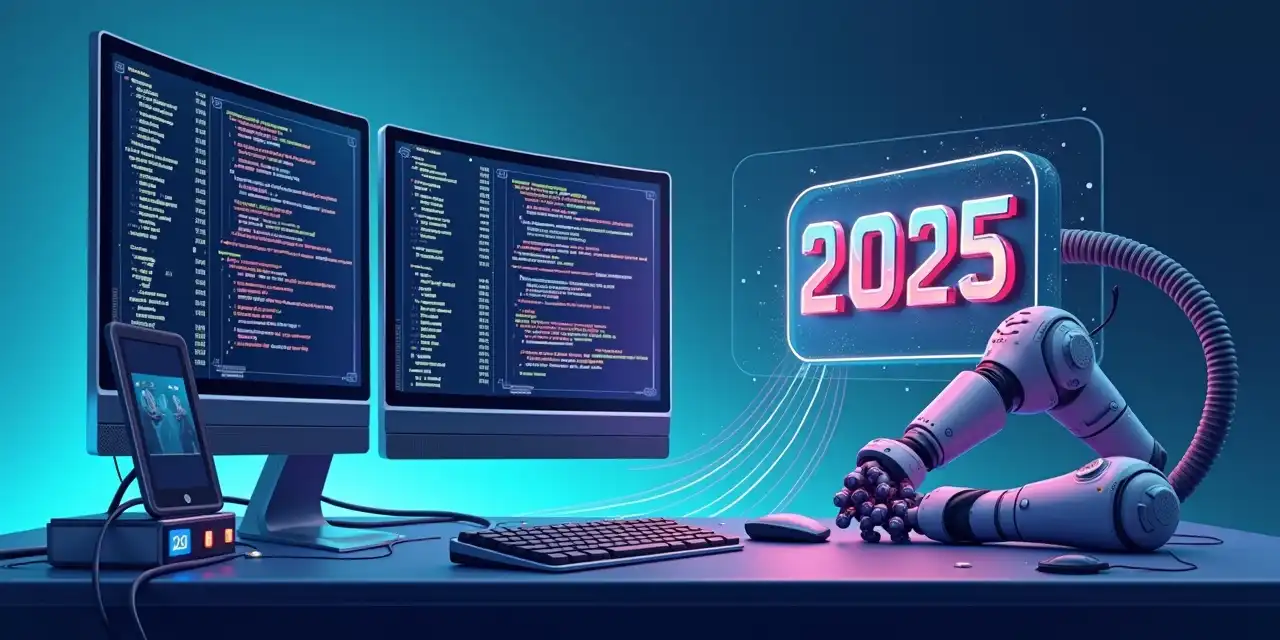
The Impact of AI on Custom Software Development in 2025
In 2025, artificial intelligence (AI) continues to reshape the software development landscape, transforming how custom solutions are designed, built, tested, and maintained. As AI technologies mature and become more accessible, they're increasingly integrated into every phase of the development lifecycle—unlocking greater efficiency, accuracy, and value for businesses.
Here’s how AI is driving innovation across the custom software development process:
1. Smarter Requirements Gathering & Planning
One of AI’s most impactful contributions lies in the earliest stage of software development: understanding what to build.
Advanced AI tools now assist in analyzing business processes, user interactions, and market trends to uncover optimization opportunities that might be overlooked by human analysts. These tools can:
-
Generate preliminary requirements documents
-
Suggest features based on industry standards
-
Analyze competitors and recommend differentiators
This means businesses can start development with clearer, data-backed goals, reducing the risk of costly rework later on.
2. AI-Powered Code Generation
The days of AI as just a smart autocomplete tool are behind us.
Today’s AI coding assistants are capable of generating entire functions, classes, or even complete modules based on simple natural language descriptions. Developers can now communicate with these tools in plain English—for example, “Create a user login system with email verification”—and receive production-ready code in seconds.
This accelerates development timelines while freeing engineers to focus on high-level design and problem-solving.
3. Automated Testing & Self-Healing Systems
AI is dramatically improving the quality assurance process, too.
Modern AI testing tools can automatically generate test cases by analyzing the codebase, identify edge cases, and even predict where bugs are most likely to occur. Some systems can go a step further, identifying and resolving certain defects without human intervention—creating “self-healing” code environments.
Benefits include:
-
Faster testing cycles
-
Fewer bugs in production
-
Improved software reliability
4. Intelligent Deployment & Monitoring
Deployment is no longer a guessing game.
AI-driven deployment tools can forecast the best time to release updates, allocate cloud resources based on predicted demand, and optimize infrastructure costs. Once live, AI monitoring systems proactively detect anomalies, performance issues, or potential downtimes—and can often respond autonomously before users are even affected.
This leads to smoother operations, reduced downtime, and more predictable scaling.
5. Building Smarter, Evolving Applications
The true power of AI doesn’t stop at development—it extends into the software itself.
More and more custom applications now include embedded machine learning models that allow them to:
-
Learn from user behavior
-
Adapt to new inputs or patterns
-
Continuously improve their performance
This turns software from a static tool into a dynamic, intelligent asset that grows more effective over time.
Future-Ready Businesses Need Future-Ready Software
For companies investing in custom software solutions, understanding the role of AI is no longer optional—it's essential.
Partnering with a development team that understands AI integration can make the difference between a basic application and a transformative solution that drives real business outcomes.
Ready to build smarter custom software?
Contact us today to discover how AI-powered development can give your business a competitive edge.
